Employers support employees in their current jobs, but do less to prepare them for tomorrow’s careers
71% help employees keep up with developments in their field, while only 44% invest in skills for the future.
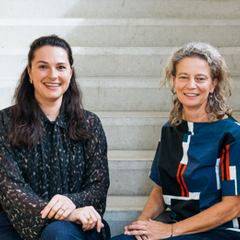
by Ans De Vos, Sofie Jacobs, Jan Laurijssen
| November 19, 2026
Share item
Almost half (48%) of the employers surveyed expect AI and digitalisation to have the greatest impact on future careers. Other societal developments, such as pension policy and international conflicts, are also seen as potential threats. Yet employers’ career support efforts tend to focus more on employees’ current jobs: 71% help employees keep up with developments in their field, while 44% support them in developing skills they may need in the future. Only a quarter (25%) provide alternative career options for employees at risk of losing their jobs. These are the findings of the 2026 Career Radar*, a study by Antwerp Management School and SD Worx.
Change brings both opportunities and threats
Employers do not view the future solely with concern. Almost two-thirds (62%), for example, see AI and digitalization as an opportunity for future careers, while around a quarter (26%) consider them a threat.
Other developments are viewed more negatively. More than half of the employers surveyed (54%) see changing employer obligations and costs as a threat to future careers. Pension policy and international conflicts are also more often perceived as threats than as opportunities.
The future of careers is therefore shaped not by a single development, but by several changes happening simultaneously. This calls for a broader approach to career support, one that looks beyond technological developments and new skills.
Focus on the current job
Employers make various efforts to support their employees, but these are more often focused on performing well in their current jobs than on preparing for possible future career moves. For example, 71% of employers actively help employees keep up with developments in their field. More than six in ten (62%) also say that managers consciously discuss employees’ needs and ambitions with them.
Less attention is paid to employees’ longer-term careers. Although more than four in ten employers (44%) help employees develop skills they may need in the future, 38% say they do so to a limited extent or not at all. Only 27% of employers discuss what societal changes could mean for employees’ careers. And when an employee’s current job may come under pressure in the longer term, preparation for alternative options remains limited: only a quarter (25%) provide realistic alternatives for employees at risk of losing their jobs.
“Employers see various changes coming their way, but this does not always translate into the way they support their employees. Keeping up with developments in your current job is important, but it is not the same as being prepared for your future career. That also requires conversations about what these changes could mean, as well as opportunities to apply skills in other tasks, projects or roles.”
—
Prof. dr. Sofie Jacobs and prof. dr. Ans De Vos
Sustainable work for the future
Preparing for future changes is not just about acquiring new skills or exploring alternative career opportunities. Attention must also be paid to whether employees can sustain their work in the long term. Almost four in ten employers surveyed (38%) anticipate potential long-term employee absence due to illness or burnout. Although 61% say they pay attention to employee wellbeing when changes occur, only 39% say they place a strong or very strong emphasis on ensuring a manageable physical, emotional and mental workload.
“Integrating AI into organisations involves much more than teaching people how to work with new technology. The real question is how we organise work itself: which tasks should be delegated to AI, where is human expertise essential, and how can the two complement and strengthen each other? This is known as work design, and it will be an important responsibility for HR in the years ahead, together with managers, while giving employees room to learn and experiment. At the same time, we must ensure that these new ways of working remain healthy and sustainable for people.”
—
Jan Laurijssen, HR-researcher and consultant at SD Worx
Formal career policies do not guarantee a future-oriented approach
Career support is not yet structurally embedded in every organisation. Only 27% of the employers surveyed have a formal career policy, while 40% mainly address career-related questions through ad hoc solutions. In addition, 36% provide active career guidance and support, and 28% say they pay attention to the careers of all employees.
Interestingly, larger organisations are more likely to have a formal career policy, but the research does not show that they are demonstrably more proactive in preparing for future career changes. Having a formal policy therefore does not automatically translate into a more future-oriented approach.
A formal career policy is not an end in itself. What really matters is what employees experience in practice. Are changes discussed in time? Do employees gain insight into possible next steps, and are they given the opportunity to take them? The challenge for employers is to provide career support not only when problems arise or specific career questions are raised, but also to proactively create room for it.
A practical tip
“You can see HR's proactive role when organizations stop treating recruitment and talent development as two separate worlds. This naturally shifts the focus from filling today's vacancies to identifying the skills that will be needed tomorrow. It also helps employees take a more active role in identifying which competencies they can further develop themselves, and which skills require organizations to attract external talent.”
—
Jan Laurijssen, HR-researcher and consultant at SD Worx
About the research The Career Radar is a study conducted by Antwerp Management School and SD Worx, in collaboration with BPact, Het Nieuwsblad, HRMagazine and VBO (the Federation of Belgian Enterprises). Following quality checks, responses from 522 employers and HR professionals, 1,879 employees and 369 self-employed individuals without employees were included in the analysis. The data were supplemented with panel data (data collected from a fixed group of respondents). The samples are not representative of the entire Belgian or Flemish population. Employers and employees were not matched within the same organisations. The figures in this press release are based on the employer survey and relate to June 2026.