Pensions, regulations, technology, international conflicts: Belgian careers under pressure
How are AI and societal changes shaping our careers? The Career Radar study by Antwerp Management School and SD Worx explores how employees view their future at work.
by Sofie Jacobs, Ans De Vos, Jan Laurijssen
| October 15, 2026
Share item
One in four fears losing their job or being unable to work
Our careers are changing, and we are feeling the impact more than ever. Artificial intelligence is transforming the way we work and reshaping job roles. International tensions and societal changes are creating uncertainty in the labour market. What do these developments mean for employees, and how do they view their future at work? The Career Radar, a study conducted by Antwerp Management School and SD Worx among 1,879 employees, explores how societal changes are affecting their experience of work and shaping their careers.
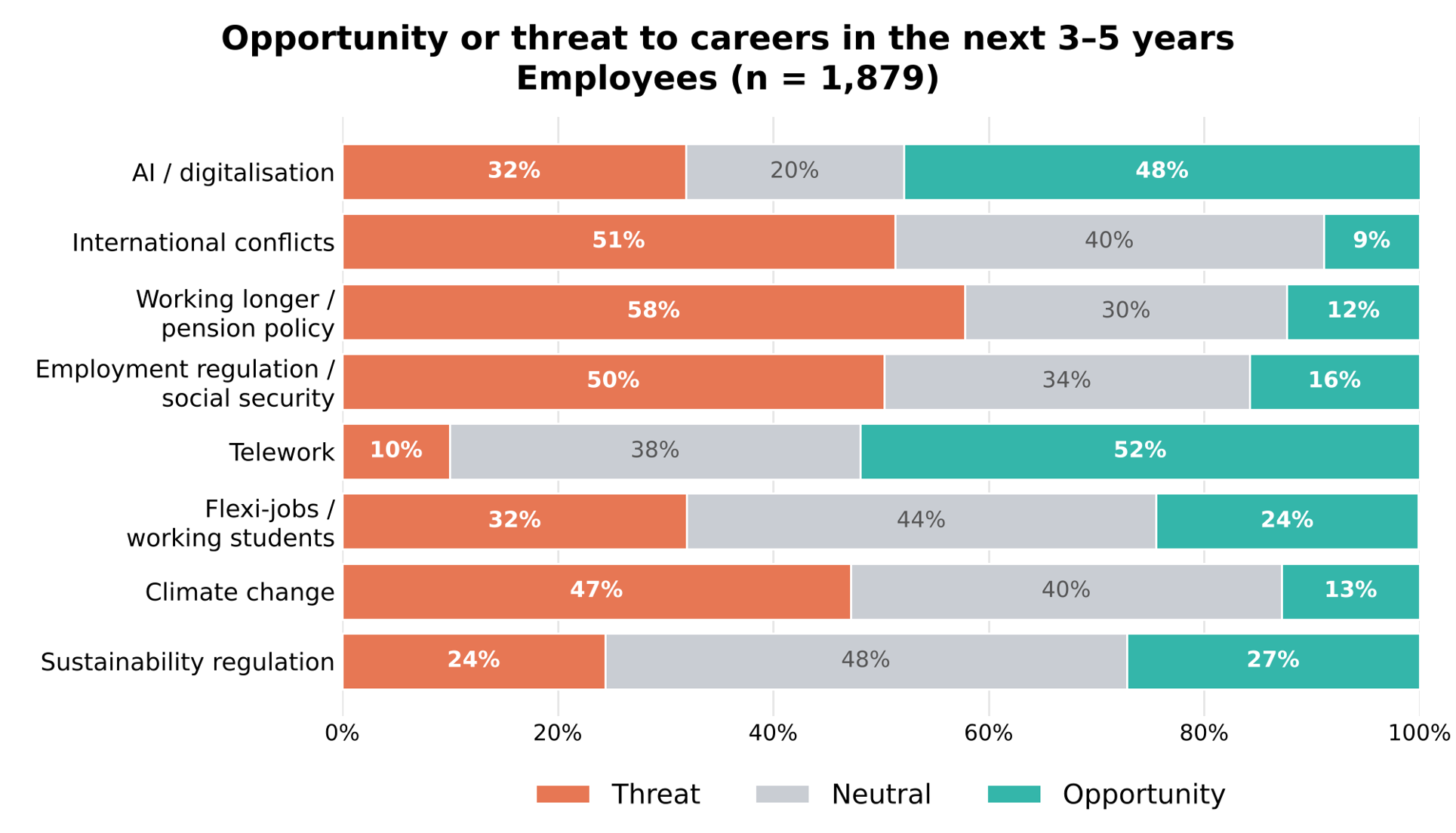
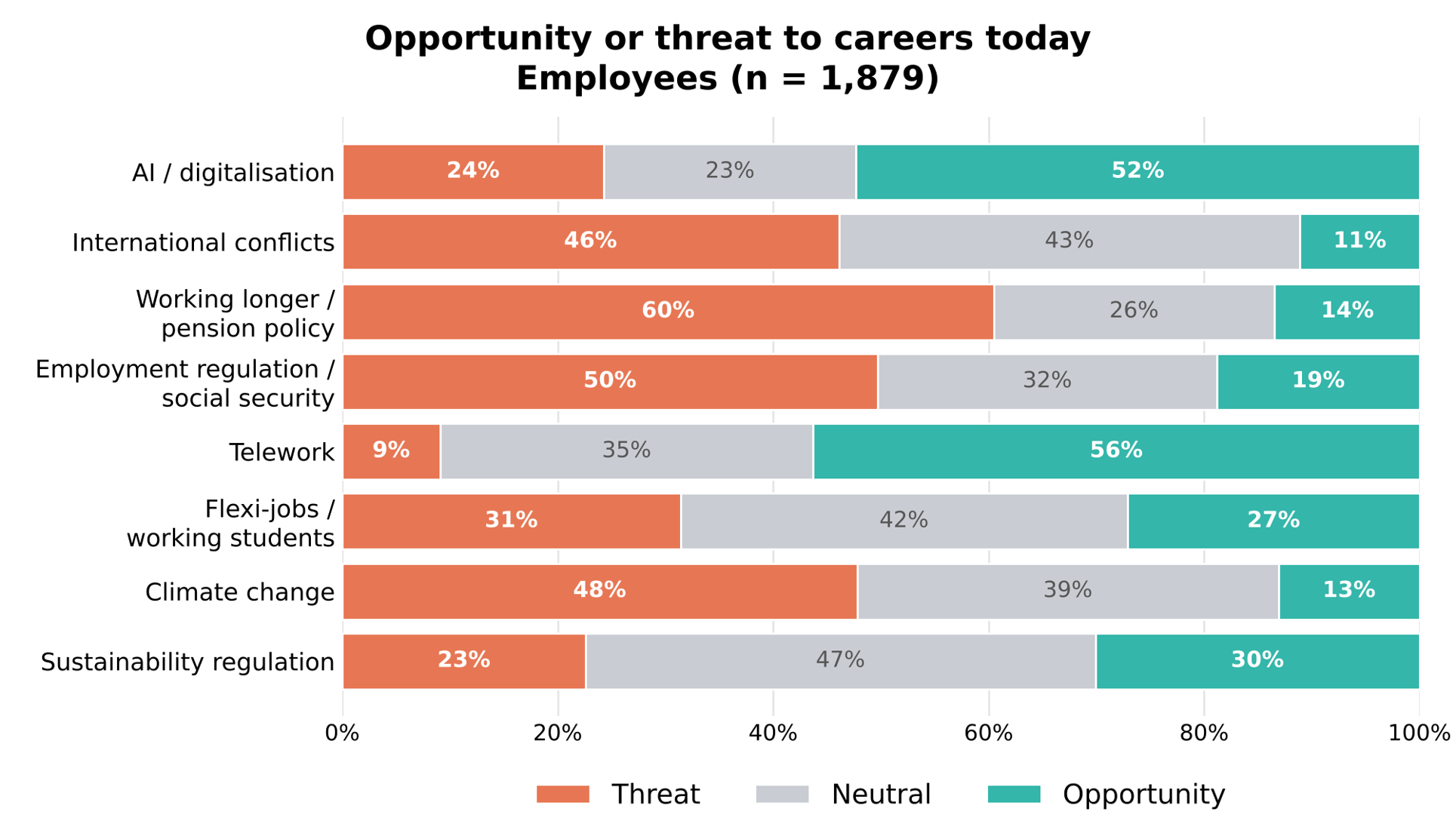
Belgian employees today are not facing one major change, but several developments affecting their work and careers. While AI is more often seen as an opportunity, changes to pension policy and the prospect of working longer are more frequently perceived as threats. These developments shape not only how employees view their careers, but also how they experience their current work. The Career Radar examined eight developments and whether they are seen as threats or opportunities. Three were predominantly perceived as threats and two as opportunities.
The question, therefore, is not simply which changes lie ahead, but above all what they mean for people’s ability to continue working, today and tomorrow. For example, 52% of respondents currently view the impact of AI positively, while one in three sees it as a threat. Working longer and changes to pension policy are more often regarded as a threat (61%). Changes to employment and social security regulations (50%) and international conflicts (51%) are also cited as threats by around half of the employees surveyed.
How employees experience these changes is also linked to their experience at work. The study shows, among other things, that AI benefits work performance in the short term, but also raises concerns about job loss and the chances of finding another job. Concerns about changes to pension policy and employment and social security regulations negatively affect performance, job satisfaction and mental health.
The developments employees consider important also differ by age and job role. Respondents aged 39 and under primarily identify AI as the development with the greatest impact on their careers, while those aged 50 and over more often point to working longer. Respondents in operational roles, meanwhile, expect less impact from AI.
“The same developments do not mean the same thing to everyone. Moreover, several changes are taking place simultaneously, bringing both opportunities and uncertainty. To understand what this means for sustainable careers, it is therefore not enough to focus on a single trend. We also need to look at how employees experience these changes and what they mean for their work today and their careers in the future.”
—
Sofie Jacobs & Ans De Vos, Professors of Career Development at Antwerp Management School
“The fact that employees today are dealing with so many different developments at once calls for a tailored approach. What represents an opportunity for one employee may be a threat to a colleague. One in four, for example, fears losing their job or being unable to work for an extended period due to illness. Employers therefore need to respond to these different starting points rather than taking a one-size-fits-all approach. Encouragingly, two-thirds recognise that continuous learning is necessary to keep up. With the Career Radar, we want to help organisations translate insights like these into concrete career policies.”
—
Jan Laurijssen, HR researcher and consultant at SD Worx
Looking ahead: continuous learning is the best defence against uncertainty
Looking ahead to the next three to five years, respondents expect the number of threats to increase slightly rather than decrease. At the same time, they expect their work and careers to continue changing. Some 67% believe they will need to keep learning continuously, and 38% expect to have to develop new skills. But there are also concerns about the future: approximately one in four fears losing their current job (26%) or being unable to work for an extended period (26%). The findings therefore paint a mixed picture: employees recognise the importance of ongoing learning and development, while also feeling uncertain about their future careers.
Maatschappelijke veranderingen: kans of bedreiging?
Welke maatschappelijke veranderingen worden als kans of bedreiging gezien voor het werk vandaag en voor de loopbaan in de komende drie tot vijf jaar ?
About the research
The Career Radar is a study by Antwerp Management School and SD Worx, in collaboration with Bpact, Het Nieuwsblad and HRmagazine. Following quality checks, responses from 1,879 employees were used in the analyses. They assessed eight societal and work-related developments and the opportunities and threats they see for their current work and their careers over the next three to five years. The sample was supplemented with panel data from B-Pact.