Aquafin and Antwerp Management School put late-career employment on the HR agenda
A good goodbye begins years before the departure. How do you guide employees aged 55 and over into their final career phase? Aquafin and AMS are researching what works for engagement, knowledge sharing and saying goodbye.
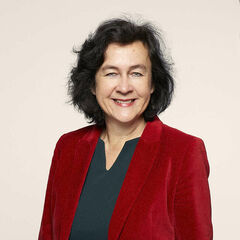
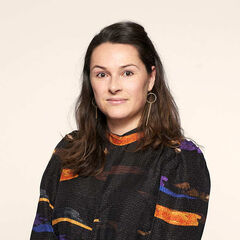
by Peggy De Prins, Sofie Jacobs
Share item
Antwerp, 29 September 2026 – As careers grow longer, a well-considered end-of-career policy becomes increasingly important. Yet within HR, this phase still receives relatively little attention. Aquafin and Antwerp Management School (AMS) want to change that. Within their knowledge partnership on sustainable employability, they investigated how employees aged 55 and over view their remaining career and retirement. The research makes clear that this phase receives too little attention, and that older employees are anything but a homogeneous group. Based on in-depth interviews with employees aged 55+ and 60+ at Aquafin, Antwerp Management School developed a profile typology and a scientifically grounded framework with recommendations for end-of-career management and offboarding. The framework distinguishes three key moments: the last 1,000, 100 and 20 working days.
Organisations rightly invest in a good start for new employees. At the other end of the career, however, things often go quiet: offboarding is still too often reduced to practical and administrative tasks shortly before departure.
As people stay in work longer, it becomes more important to consciously shape the years leading up to retirement as well. After all, leaving after a long career also touches on professional identity, social contacts, accumulated expertise and the transition to a new phase of life. Organisations, too, reap the benefits of well-prepared and appreciative end-of-career support.
There is no such thing as the older employee.
The in-depth interviews with Aquafin employees challenge the image of older workers as mainly counting down to retirement. Some look forward to more freedom; others want to stay active because of social contacts, financial security, recognition, new challenges or the chance to pass on their experience.
End-of-career policy therefore calls for a tailored approach. What works for one employee does not necessarily suit another. The starting point is not age, but the conversation: what does this person need, what do they still want to contribute, and how does that align with what the organisation needs?
"I don't want to feel written off," said one of the Aquafin employees who took part in the interviews.
The later career phase is still too often viewed through a single assumption: that everyone wants to stop as soon as possible. Our conversations show a far more nuanced picture. One employee is looking for flexibility, another mainly wants to share knowledge or keep taking on responsibility.
—
Professor Peggy De Prins, Antwerp Management School
From swallow to cat: profiles as a conversation aid
To make these differences easier to discuss, Aquafin and Antwerp Management School use a profile typology inspired by the animal kingdom. These profiles are not fixed labels or diagnoses. They give managers and HR professionals a tool to hold the conversation about the end of a career openly and without prejudice.
The swallow looks forward to the freedom of retirement.
The workhorse keeps working loyally and dutifully until retirement age.
The owl draws energy from mentoring, coaching and knowledge transfer.
The chameleon seeks a workable balance between work, private life and possible caring responsibilities.
The peacock wants to retain recognition, responsibility and professional identity.
The fox sees the later career as a stepping stone to a new initiative, project or direction.
The dolphin is motivated mainly by colleagues, social contacts and a sense of belonging.
The bear may keep working out of financial necessity or with limited work capacity.
The cat views the transition to retirement calmly and with ease.
Employees may recognise themselves in several profiles, and their expectations can change over time. The typology therefore helps managers above all not to start from assumptions, but from dialogue.
A good goodbye begins 1,000 working days earlier
Aquafin and Antwerp Management School have translated the research insights into a framework of practical recommendations. It deliberately looks far beyond the last working day and turns offboarding into a process that begins several years before retirement.
Three moments are central:
In the last 1,000 working days, the emphasis is on a meaningful use of the remaining career: which tasks give energy, and what ambitions or development needs remain? How can accumulated expertise be put to the best possible use?
In the last 100 working days, attention shifts to knowledge transfer, continuity and preparing for retirement.
The last 20 working days are devoted to wrapping up, appreciation and a personal farewell.
Offboarding should not be limited to an administrative checklist in the final weeks. Starting the conversation earlier, about motivation, ambitions and expertise, creates room for targeted knowledge transfer and for a farewell that does justice to the employee's career.
—
Professor Sofie Jacobs, Antwerp Management School
The offboarding framework is not a rigid checklist, but a collection of insights and recommendations that Aquafin can further translate into its end-of-career policy. It creates timely space for dialogue, reflection, targeted support and appropriate farewell rituals. For Aquafin, it is important that this framework is not built solely on its own HR practice, but is grounded in scientific research and in the experiences of employees themselves.
As careers grow longer, we want to actively incorporate the theme of end-of-career into our processes and conversations. We want employees to be able to put their experience to use in the final years of their careers, to keep developing and to keep making a meaningful contribution, and to do so in a way that is workable. Thanks to the collaboration with Antwerp Management School, we can underpin that policy with insights from research and with what our own employees tell us. In this way, we are building an approach that helps both our people and our organisation move forward.
—
Sabine Schellens, Director HR & Organisational Development at Aquafin
Bringing knowledge in from outside
The collaboration fits with how Aquafin approaches organisational development. The organisation does not want to work in isolation, but deliberately seeks connections with knowledge partners and other organisations to bring in new insights and further develop its own way of working. The knowledge partnership with Antwerp Management School thus translates academic research into a concrete instrument that Aquafin can apply in its own HR practice.
Corporate Membership Network
As an established corporate partner, Aquafin is part of Antwerp Management School's Corporate Membership Network. Together with organisations such as SD Worx, Elia and Mensura, it forms an open network in which knowledge sharing, collaboration and innovation are central. Aquafin is also a member of the Dean's Club.
Aquafin
Aquafin treats the domestic wastewater of Flemish households so that it can flow cleanly back into our rivers and streams. In addition to wastewater treatment, Aquafin advises and supports governments, sewer managers and companies on sustainable water management, drought mitigation and solutions to flooding. Aquafin employs 1,300 people.